
Technical Resources
Coatings & Finishes
Compare coating and finish options for your material, operation and tool.
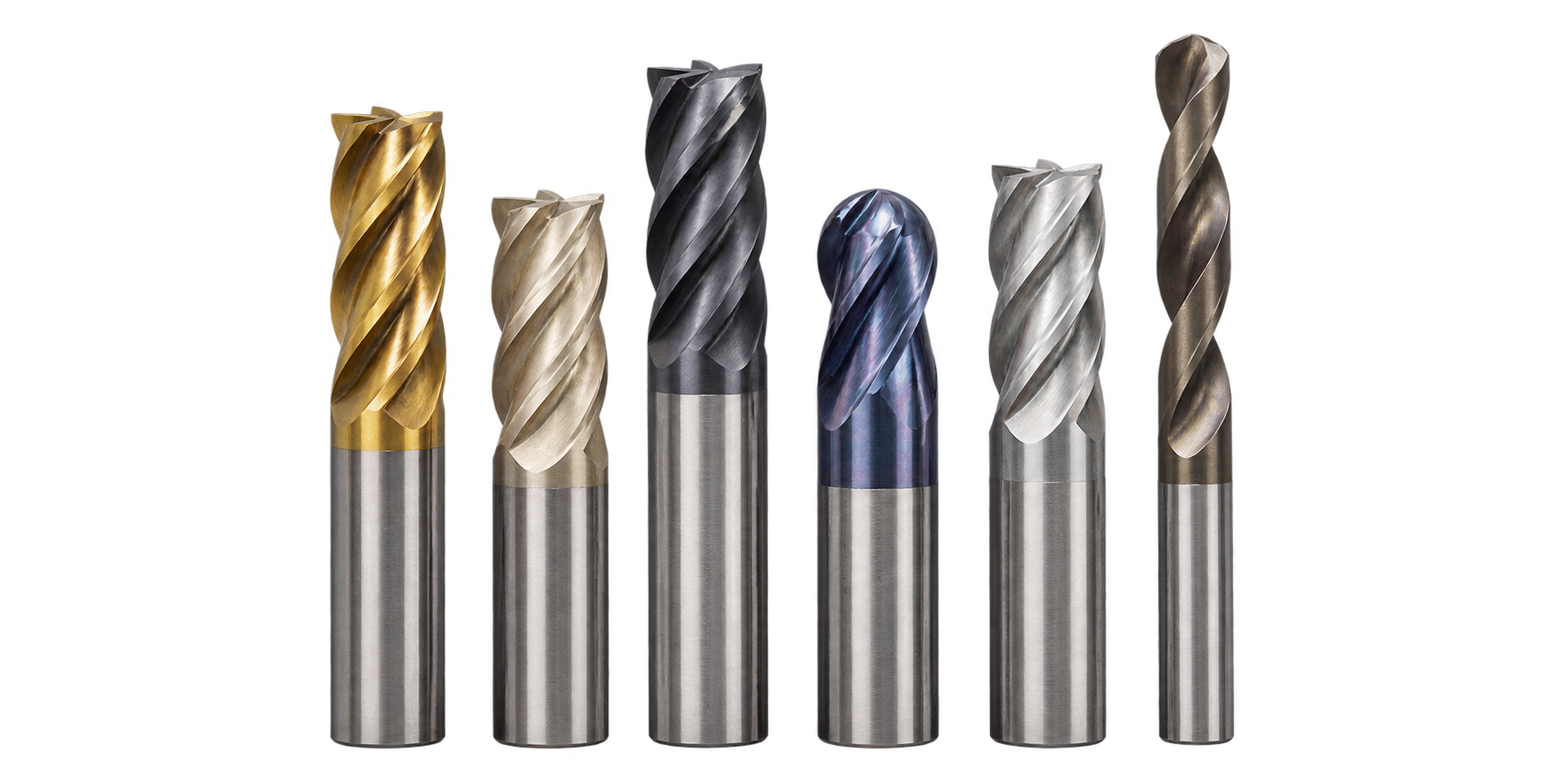
Start with your workpiece material, operation and tool series. Compare the options below, then use the selected product’s verified cutting data where available.
Coatings
AlTiN
- When to consider it
- Steel, stainless and heat-resistant alloys; milling, drilling and tapping.
- What it offers
- High-temperature resistance and hardness.
Speeds & feeds guidance
Use the tool series chart, including its dry/coolant conditions.
AlCrO-MAX
- When to consider it
- Selected tools for alloy steel, stainless steel, cast iron and high-temperature alloys.
- What it offers
- Abrasion resistance.
Speeds & feeds guidance
Use published settings for the specific series and operation.
TiCN
- When to consider it
- Milling, drilling and tapping where the manufacturer specifies TiCN.
- What it offers
- An option where AlTiN is unsuitable.
Speeds & feeds guidance
Use TiCN-specific values when supplied; do not borrow an AlTiN increase.
TiN
- When to consider it
- General-purpose milling, drilling and tapping at lower cutting speeds.
- What it offers
- A general-purpose hard coating.
Speeds & feeds guidance
Use the selected tool’s TiN cutting data. Gold color alone does not identify TiN.
ZrN
- When to consider it
- Selected tools for aluminum, brass and bronze.
- What it offers
- Helps reduce built-up edge in gummy alloys.
Speeds & feeds guidance
Use the tool’s non-ferrous material guidance; no automatic speed increase.
Finishes & surface treatments
These treatments and catalog finish names are distinct from hard coatings such as TiN. Check the exact product specification.
Black Oxide / Oxide
- When to consider it
- Consider manufacturer-specified HSS tools for ferrous work.
- What it offers
- Helps retain lubricant at cutting edges.
Speeds & feeds guidance
Use the series chart; check suitability before machining non-ferrous materials.
Steam Oxide
- When to consider it
- Selected HSS drills and taps specified for ferrous materials.
- What it offers
- Helps retain lubricant.
Speeds & feeds guidance
Follow the exact tool’s steam-oxide guidance. Catalog names and processes vary by manufacturer.
Nitride & Steam Oxide
- When to consider it
- Products specifically supplied with this combined treatment.
- What it offers
- Combines oxide lubricity and nitride abrasion resistance.
Speeds & feeds guidance
Use data for the combined treatment, rather than treating it as plain steam oxide.
Black & Gold
- When to consider it
- The drill series specified for your material and operation.
- What it offers
- A manufacturer-specific oxide finish.
Speeds & feeds guidance
Use the series chart. Black-and-gold appearance is not proof of cobalt construction.
Straw Finish
- When to consider it
- Selected straw-finish drill series, with the listed tool material confirmed.
- What it offers
- Identifies the catalog finish; it is not a TiN coating.
Speeds & feeds guidance
Use the exact drill series chart for your material. No stand-alone coating multiplier is assigned.
Gold Oxide
- When to consider it
- Products expressly listed with a gold-oxide finish.
- What it offers
- Manufacturer-specific surface treatment.
Speeds & feeds guidance
Follow the selected series chart. A gold appearance does not establish TiN or cobalt content.
Bright / Uncoated
- When to consider it
- Tools specified for your material; polished bright tools can help where chips tend to cling.
- What it offers
- Bright describes a polished finish; uncoated describes the absence of an added coating.
Speeds & feeds guidance
Use the uncoated/bright tool’s own chart. These labels do not establish identical geometry or performance.
What changes in speeds & feeds?
Cutting speed
A coating’s heat and wear resistance can affect suitable cutting speed. Use the manufacturer’s SFM and RPM guidance for the exact tool and material.
Feed rate
Check feed per tooth or per revolution separately. A speed increase is not automatically the same percentage increase in chip load.
Tool life & finish
Compare tools under the same material, geometry, cutting conditions and coolant setup. Results depend on the application.
No universal percentage increase. Numerical comparisons will appear only where matching manufacturer data supports them. A general benefit is not an approved speed/feed multiplier.
On a product page, use its material-specific cutting-data panel when available. If no verified values are shown, ask us for the appropriate series guidance.
Ask about your applicationFind tools by specificationMaterial examples are starting points, not approval for every tool. Product-specific guidance takes precedence. Manufacturer finish names may differ.